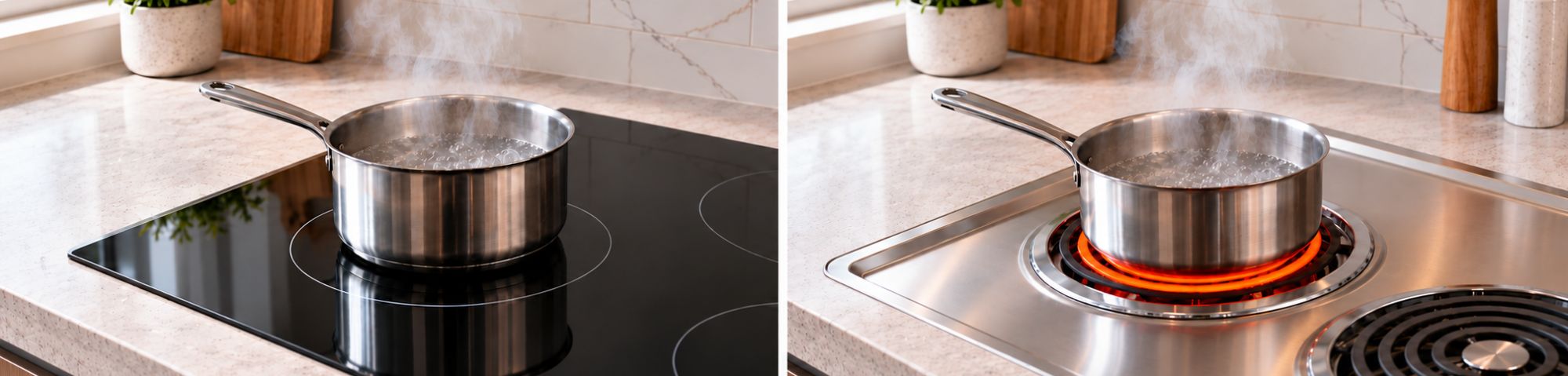
Induction and regular electric cooktops may look similar, but the way they heat cookware creates noticeable differences in everyday use. Both operate on electricity, yet regular electric cooktops heat an element that transfers warmth to a pan, while induction generates heat directly within compatible cookware. This affects more than cooking speed: it also influences how hot the cooking surface becomes, how easily spills clean up, and how much excess heat enters your kitchen. Understanding these differences can help you choose an appliance that fits your cooking habits and the way you use your space.
Regular electric cooktops remain a practical option for customers who prefer a familiar cooking method and want flexibility with their existing cookware. Induction offers a more responsive experience, with quick heating, easier power adjustments, and a generally cooler cooking surface. Neither option is the perfect fit for every household, but induction’s advantages can make a meaningful difference for customers who cook often or want to simplify cleanup. Comparing heating, cookware, energy efficiency, and safety certifications gives you a clearer picture of what each option brings to your kitchen.
Heating and Kitchen Comfort
A regular electric cooktop relies on an exposed coil or a heating element beneath a glass ceramic surface to produce cooking heat. The element becomes hot first, then transfers that heat into the cookware above it. Because the burner stores heat, it takes time to warm up and continues releasing warmth after you lower the setting or switch it off. This also allows more excess heat to enter the surrounding kitchen, which can become noticeable during longer cooking sessions or in smaller spaces. Regular electric delivers dependable cooking performance, but its heating method makes quick temperature changes less immediate.
Induction heats compatible cookware directly through electromagnetic energy, allowing the pan itself to become the heat source. This means the cooktop does not need to heat a burner first, so cookware warms quickly and adjustments change the energy supplied to the pan promptly. When you remove the pan, induction heating stops and the cooking surface begins cooling, although heat transferred from the cookware can leave the glass hot enough to cause burns. With less excess heat escaping into the air, induction can make the kitchen more comfortable while giving you greater control over simmering, boiling, and other cooking tasks. These differences make induction especially appealing when cooking speed and kitchen comfort are priorities.

Easier Cleaning and Everyday Maintenance
Spills happen on both types of cooktops, but surface temperature affects how difficult those spills are to remove. On regular electric models, exposed coils or hot glass can cause food, sauces, and other residue to burn onto the cooking area. Smooth-top electric cooktops are easier to wipe than many coil designs, but baked-on spills can still require extra effort and a suitable cooktop cleaner. Exposed-coil models also have spaces around and beneath the burners where food can collect. For customers who cook frequently, this can mean spending more time cleaning after meals.
Induction cooktops still get dirty, but their generally cooler glass surface makes spills less likely to bake on as stubbornly. Since heat is generated in the cookware rather than a heating element beneath the glass, much of the surrounding surface stays cooler during use. The area beneath a hot pan can still become hot, so burned-on residue is possible, and cleanup should wait until the surface is safe to handle. Even with those considerations, induction’s smooth surface and reduced surface heat often make everyday messes easier to manage. For busy households, easier cleanup is a practical benefit that adds to induction’s appeal.
Cookware Compatibility and What It Means for You
Regular electric cooktops work with a broad range of cookware because the burner transfers heat into the pan without requiring a magnetic base. This gives customers more flexibility to keep suitable pots and pans they already own, including many aluminum, copper, and stainless-steel pieces. However, not every piece of cookware is appropriate for every electric surface, so its shape, condition, and manufacturer’s guidance still matter. Flat-bottomed cookware helps maintain good contact on smooth-top models, and glass or ceramic cookware should only be used when approved for that application. Regular electric can be convenient if avoiding cookware replacement is a major priority.
Induction requires cookware with a suitable magnetic base, such as cast iron, carbon steel, or induction-compatible stainless steel. Aluminum and copper cookware can also work when they include a compatible magnetic base, so the entire pan does not have to be made from one magnetic material. If a magnet sticks firmly to the bottom, that is a useful sign of compatibility, though the pan must also meet the cooktop’s size and shape requirements. This requirement can take some adjustment, but it enables the direct heating process behind induction’s performance. The cookware itself does not prevent messes; heating the pan directly helps keep the surrounding surface cooler, making spills less likely to burn on.
Electricity Use and Energy Efficiency
Although induction is often discussed separately from electric cooking, it is also an electric appliance. The difference is how effectively each technology transfers energy into cookware: conventional electric heats an element first, while induction produces heat within the pan itself. The U.S. Department of Energy reports that induction appliances can be up to 10% more efficient than conventional smooth-top electric ranges. That gives induction an efficiency advantage, although the difference between these two electric technologies is smaller than comparisons with gas might suggest. Actual electricity use depends on the model, cookware, heat settings, and cooking habits, so the benefit will vary between kitchens.
For everyday cooking, induction’s efficiency works alongside its fast heating and responsive controls. Bringing water to a boil sooner or adjusting the power promptly can make meal preparation more convenient while reducing unnecessary heating. Less excess warmth also enters the surrounding kitchen, which can improve comfort during use. Regular electric can still be used efficiently with properly sized cookware and sensible cooking habits, but induction offers an appealing combination of energy transfer and cooking performance. Both rely on electricity and will stop operating during a power outage, so neither has an advantage in that situation.
Certifications and Cooking Safety

Safety certification deserves attention whether you choose induction or regular electric. A recognized certification mark shows that an appliance has been independently evaluated against applicable safety standards, giving customers more information than a general claim that a product is safe. Look for a listing mark such as UL or ETL on the appliance and confirm that the model is intended for your installation and use. An ETL-listed product can be tested to a UL standard, so the testing organization and the standard number serve different roles. Certifications are valuable when choosing an appliance, alongside correct installation and careful everyday use.
True Induction states that its cooktops are safety certified, and its product listings identify standards for different applications. Built-in residential models such as the TI-1B and TI-2B list UL858, the portable residential TI-2C lists UL1026, and commercial models such as the TI-1SS list UL197. Customers should confirm the listing for the particular model they plan to purchase, especially when choosing between residential and commercial applications. These certifications strengthen True Induction’s appeal for customers who value documented safety testing alongside cooking performance. Regular electric buyers should look for recognized safety certification as well, since either heating method benefits from an appliance evaluated for its intended use.
Which Cooktop Fits Your Lifestyle Best?
The right cooktop depends on what matters most in your kitchen. Regular electric may suit customers who prefer familiar controls, want to keep a wider selection of existing cookware, or find a particular model that fits their budget and installation requirements. Induction may require checking your pans or replacing incompatible pieces, and its quicker response can take a little practice if you are used to conventional electric. Comparing appliance cost, cookware needs, and everyday cooking habits helps you weigh those tradeoffs. Both options can prepare excellent meals when paired with suitable cookware and used correctly.
For customers who want faster heating, a cooler cooking environment, and easier cleanup, induction offers several advantages that support a more convenient cooking routine. Its direct heating method also provides responsive control and an efficiency benefit over conventional smooth-top electric cooking. Choosing a certified model, such as an appropriately listed True Induction cooktop, adds documented safety testing to those practical benefits. Regular electric remains a reasonable choice for some lifestyles, but induction is a strong option for customers ready to upgrade how their kitchen performs. The best choice is the one that fits your cookware, budget, and priorities while making everyday cooking easier.