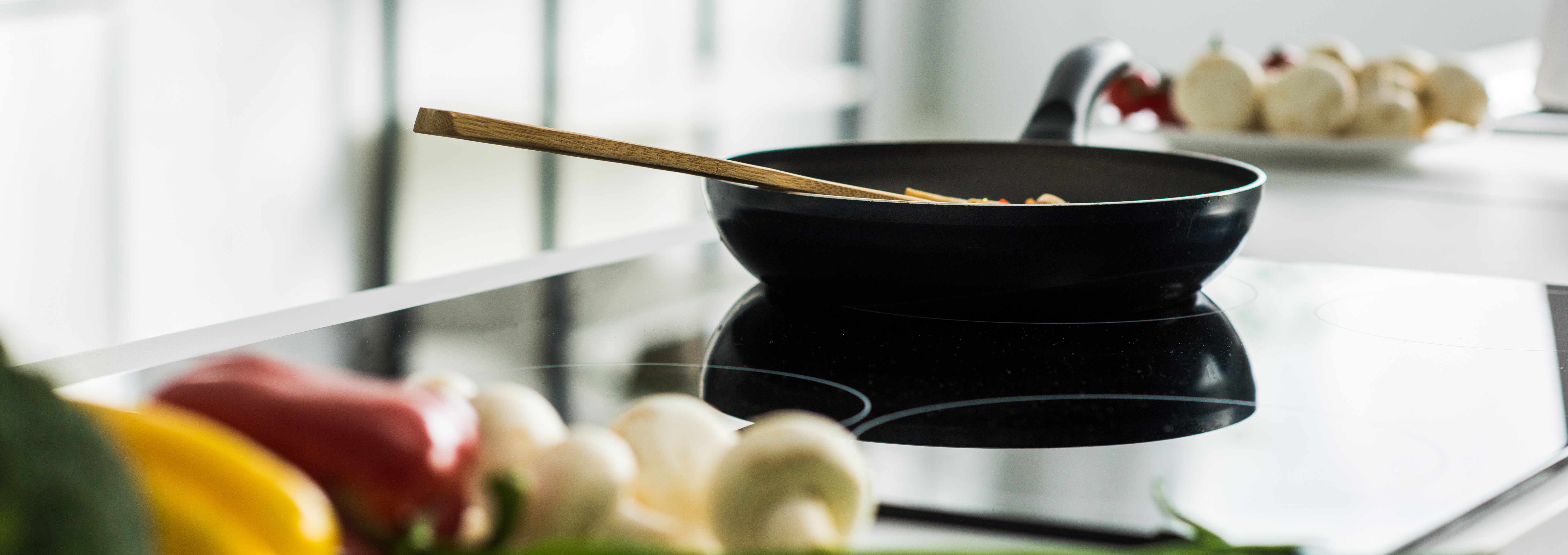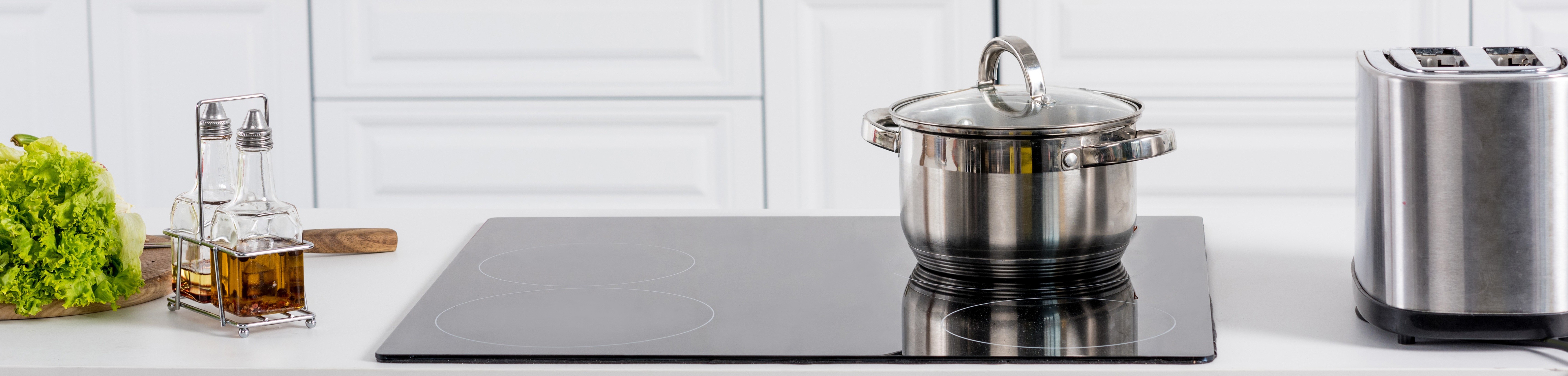
Induction cooking has quickly become one of the most exciting advancements in kitchen technology. Unlike traditional gas or electric stoves, induction cooktops use magnetic energy to heat your pots and pans directly. The result is faster cooking, greater efficiency, and a safer, cooler kitchen environment, all without sacrificing precision.
What Is Induction Cooking?
At its core, induction cooking is a method that transfers heat straight into your cookware through electromagnetic currents. Instead of warming a burner that then warms a pan, induction turns the cookware itself into the heat source. Because of this, the glass surface of the cooktop stays relatively cool, even while your food is sizzling.
This unique process dramatically changes the cooking experience, offering benefits that many home cooks and professionals now prefer over gas or electric systems.
How It Works
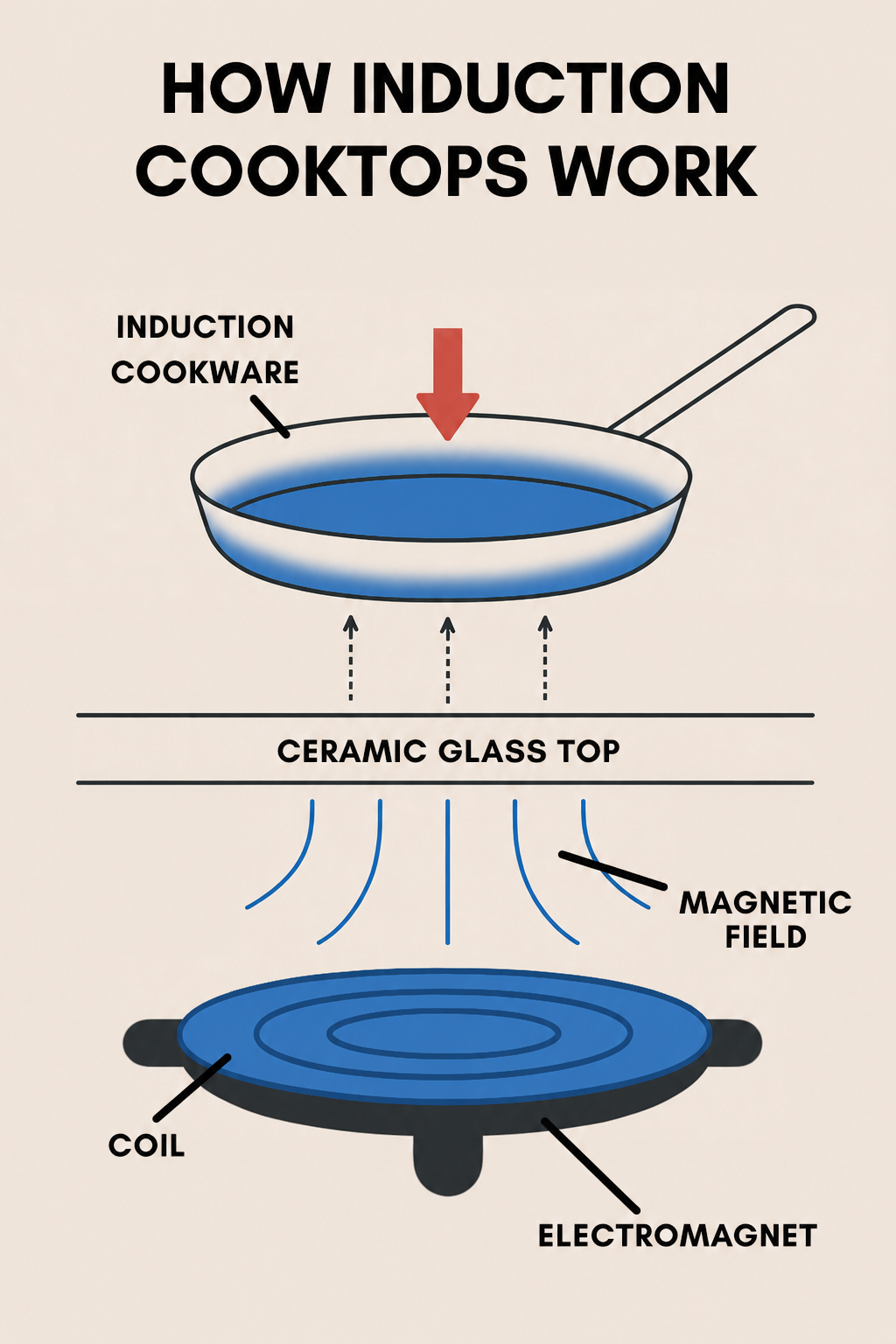
Beneath the smooth glass surface of an induction cooktop lies a coil of copper. When you switch the burner on, this coil generates a magnetic field. If a pot or pan made from a magnetic material (such as cast iron or induction-ready stainless steel) is placed on the cooktop, the magnetic field induces tiny electrical currents within the metal. These currents cause the cookware to heat up rapidly.
Because the heat is created inside the pan rather than on the stove, the cooktop doesn’t need to get hot to cook your food. It also cools down quickly when the pan is removed, adding an extra layer of safety.
Why Induction Cooking Is Becoming the New Standard
One of the biggest advantages of induction cooking is its speed. Water boils faster, pans heat up in seconds, and meals can be prepared more efficiently. With nearly all the energy going directly into the cookware, induction is also far more efficient than gas or traditional electric stoves.
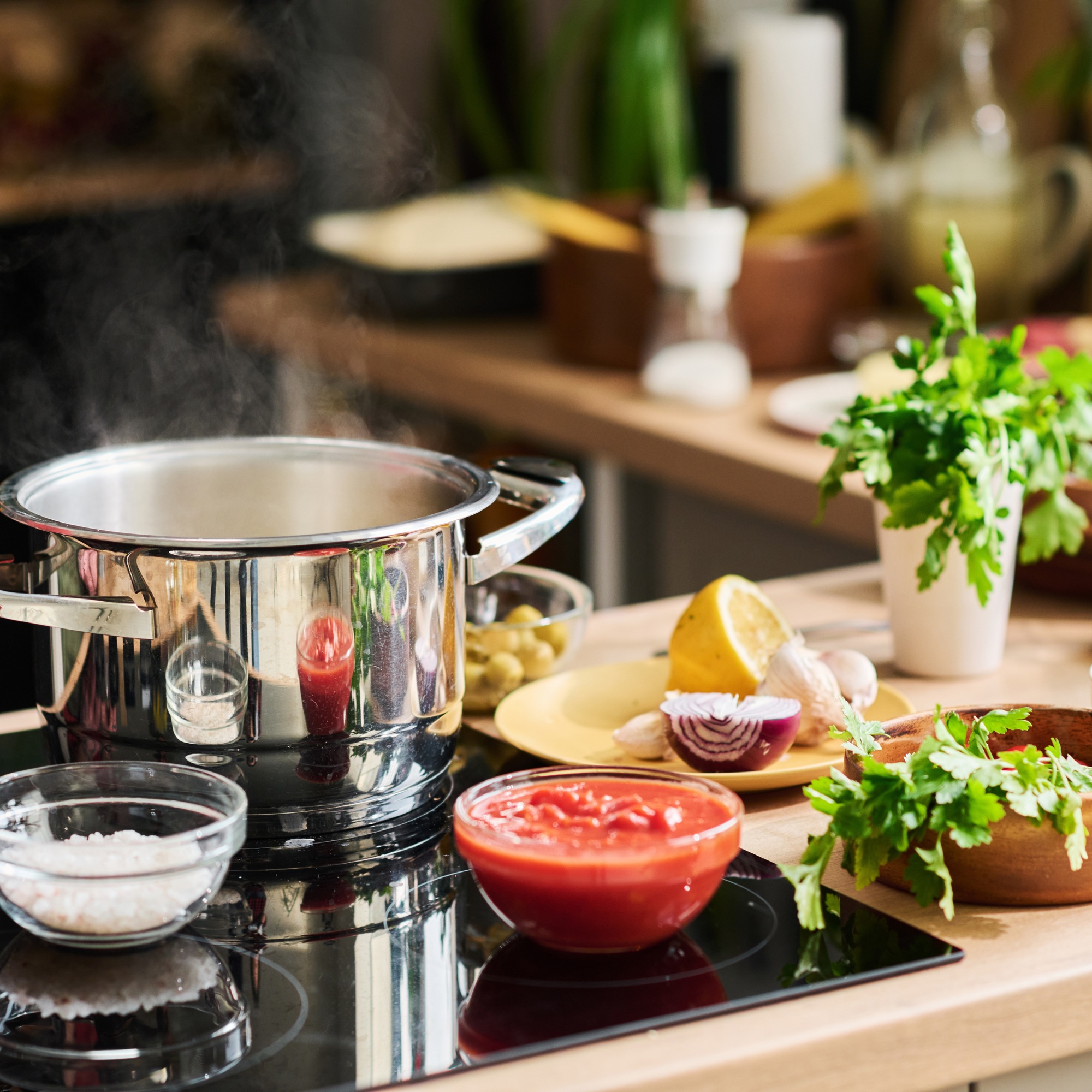
Precision is another defining benefit. Temperature adjustments happen instantly, turn the heat down and the reduction is immediate, giving you an unparalleled level of control. This makes induction ideal for tasks like simmering delicate sauces or melting chocolate without scorching.
Safety also plays a major role in induction’s growing popularity. There are no open flames, no exposed heating coils, and far less residual heat on the cooktop. Many induction units even detect whether a pan is present and automatically turn off if one isn’t.
Cleaning is simpler, too. Spills are less likely to burn onto the cool glass surface, so a quick wipe is often all that’s needed. And because the cookware, not the air, generates the heat, the kitchen stays significantly cooler during use, a welcome benefit in warm climates or small spaces.
What to Keep in Mind
While induction cooking offers many advantages, it does require the right cookware. Pots and pans must be made from magnetic materials; cast iron works perfectly, and many stainless-steel sets are compatible. Aluminum, copper, or glass cookware won’t heat on induction unless they include a magnetic base.
There’s also a brief learning curve. Induction responds more quickly than many people are used to, so adjusting to its speed and sensitivity can take a little practice. Additionally, because induction relies on electricity, it won’t operate during a power outage.
Is Induction Right for You?
Induction cooking brings together speed, safety, efficiency, and precision in a way few other technologies can match. It’s especially well suited for modern kitchens, apartments, RVs, and compact living spaces, but just as valuable in busy family homes and gourmet kitchens.
If you’re looking for a cleaner, cooler, and more responsive cooking experience, induction is a smart upgrade that can make everyday cooking easier, faster, and more enjoyable.